I normally write for corporate leaders. CMOs, executives, the people trying to steer big organisations through even bigger change. Not this time.
This one's for my speaker friends.
Here's the thing. I've spent the past few months in green rooms and at speaker dinners hearing the same nervous question, usually over a fairly average coffee: "Mate, is AI going to take our gigs?" Fair question. So I did what I do – I pointed our Narrative Intelligence engine at our own industry, the one that pays my mortgage and probably yours, and read twelve months of the global conversation about professional speaking.
Turns out the answer's more interesting than a straight yes or no. Two pictures came back. One's about what audiences want to hear. The other's about what they'll actually pay you for. And they're pulling in opposite directions.
Let's get into it.
What they're booking you to talk about
A year ago, if you wanted a safe bet on a keynote brief, you talked leadership. Not any more. AI's run away with the bill – enquiries reportedly up 237% year on year – and somewhere around November it shoved leadership off the top as the most-requested topic on the circuit. Have a look.
The rest of the picture? Steady. Rooms are still full of actual humans – in-person isn't going anywhere – budgets are flat, and audiences want substance over sizzle. So the fight for the AI slot is brutal. But here's the twist. The thing everyone wants you to talk about is the very thing quietly rewriting what a speaker is.
What makes you worth booking
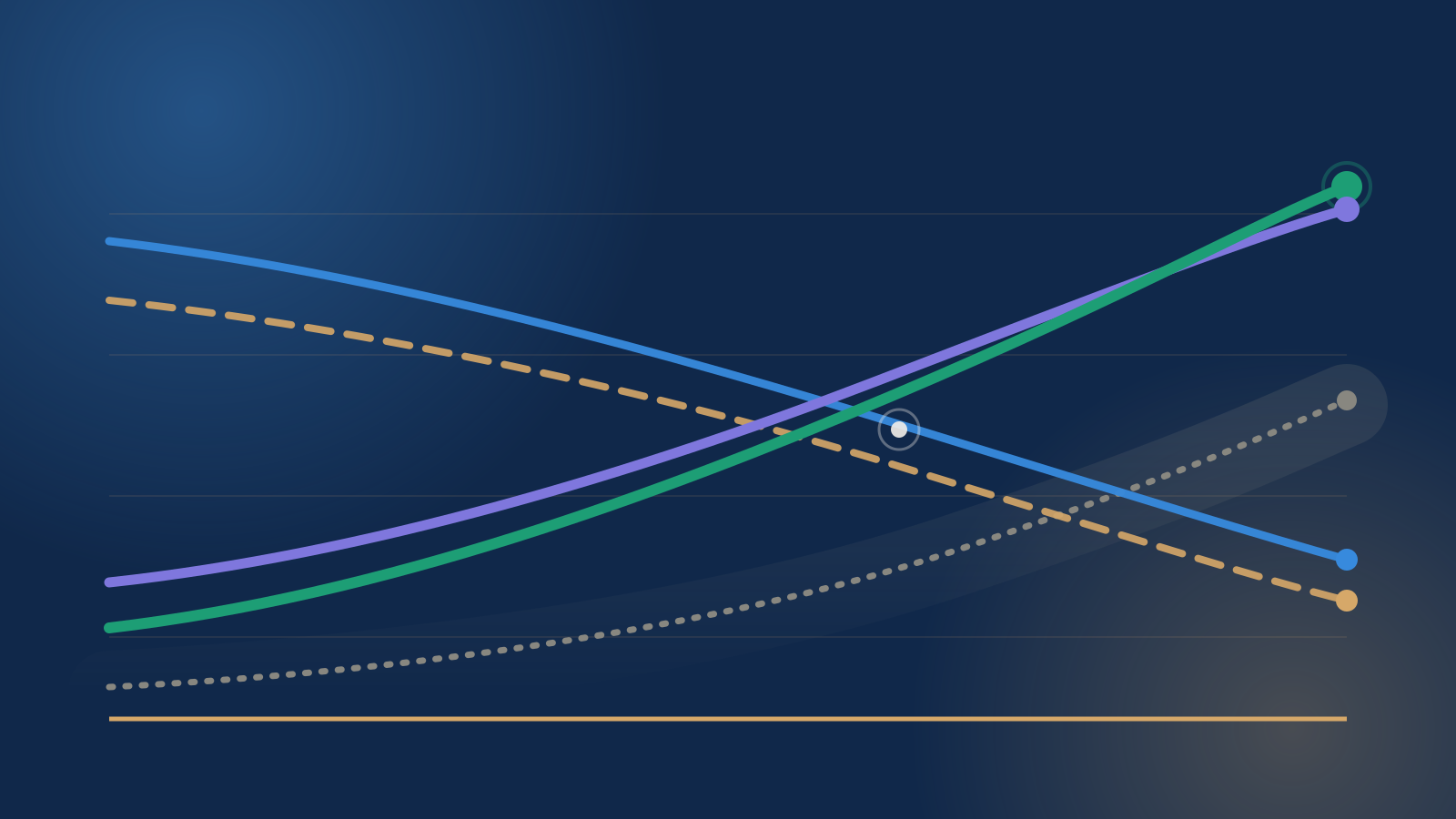
Now the uncomfortable bit. While AI was climbing the topic list, it also started quietly eating the two things we've always sold: knowing stuff and being known. So I ran a second scan – five competing answers to one simple question: what actually makes a speaker worth the fee? Watch them move.
Five worlds, two shifts, one gravity well pulling at all of them. Here's each.
1. Authority – what you know
What it rewards: proprietary frameworks, unique data, deep specialism.
Roughly 78% of organisers now want a real framework or dataset on the stage, so knowing your stuff still counts. But here's the rub – AI knows your stuff too now. Which means simply knowing it isn't the moat it used to be. This line slides down all year.
2. Authenticity – that you're real
What it rewards: story, presence, vulnerability, the un-fakeable human voice.
When AI floods every channel with content that's fine but forgettable, real gets rare. And rare gets valuable. It's the fastest riser on the board, and the one no machine can fake. This is the shift underneath everything – what you know giving way to that you're real.
3. Celebrity – who you are
What it rewards: name, brand, reach, social proof.
The one on the back foot. Planners are booking for purpose over popularity now, and a big follower count doesn't fill a room like it used to. Fame still opens the door. It just doesn't close the deal any more.
4. Catalyst – what you change
What it rewards: outcomes, ROI, the behaviour shift on Monday morning.
68% of briefs now start with a business objective before they even name a speaker. They don't want an act. They want a result. Rising fast, and hungry.
5. Commodity – the gravity well
What it rewards: nothing – it's the null world.
It's the quiet fear in every green room: that you're interchangeable. That whatever you'd say from that stage, an AI could say for free. It's rising underneath all four – which is exactly why the other four are scrambling.
So what does the year actually say?
Two crossovers tell the whole story. Around September, Catalyst overtook Celebrity – outcomes started beating fame. Around November, Authenticity overtook Authority – being real beat knowing. And by early 2026, that Commodity line climbed above both Authority and Celebrity.
Read that last one twice. The plain threat of being replaceable is now worth more than what you know or who you are. The floor rose faster than the old ceilings.
And the pattern? Almost too tidy. The two things AI's brilliant at – knowing stuff, and manufacturing a polished presence – are the two losing value. The two it can't touch – being genuinely you, and owning your audience's outcome – are the two gaining. AI didn't kill the speaking business. It repriced it.
The good news, friends
Pick a talk you give. Any talk. Ask yourself which world it's really selling. If the honest answer is Authority or Celebrity, mate, you're standing on the two lines heading south.
The good news? The move isn't complicated. Don't ditch what you know – wrap it in what only you can be, and point it straight at what your audience needs to change. Authority into Authenticity. Celebrity into Catalyst. Do it on purpose, before the market does it for you.
That's the news I wanted to bring my speaker friends. We're not being replaced. We're being asked to be more human, not less. And I reckon that's a room we can own.
A quick word on how I did this: it's a directional read of the public conversation from July 2025 to June 2026, sorted with our Five Worlds method. The shape of every line is anchored to real, dated signals – the exact month-to-month heights are my editorial judgement, not a precise source count. Think barometer, not spreadsheet.